


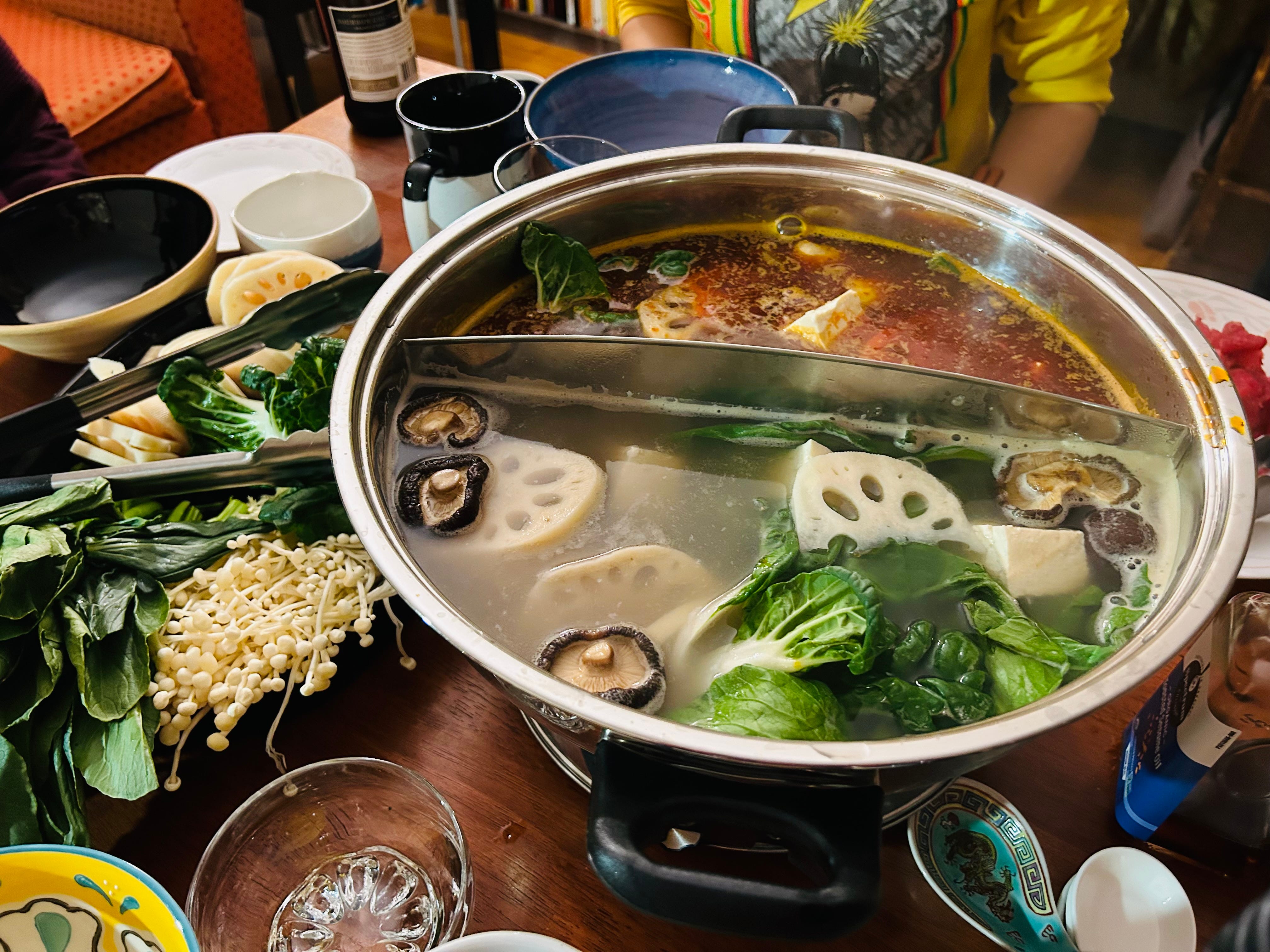
Happy year of the fire horse! I love hot pot year-round, but it’s so perfect for the winter doldrums and for any gathering with friends and family. I love the sound of bubbling broth. It’s the rare kind of meal that can be catered to almost any dietary restriction and still be incredibly delicious. I grew up with Chinese-style hot pot, or daa bin lou (打邊爐), as my family would say, which translates to “hitting the side of the pot.” My first memory of hot pot is doing it as a kid with my extended family. It started with a pot of plain boiling water (common for some Cantonese-style hot pots) that gradually took on the flavors of the ingredients added to it. I distinctly remember swishing a steaming slice of beef through a small dish of oyster sauce. Since then, I’ve made my own versions with light and flavorful (and sometimes spicy) broths and more complex sauces. I love how nourishing it is and how much depth the broth develops. I’ve observed the unique spins my friends’ families have put on it, and I’ve had so many different kinds outside of the Chinese version I had growing up.
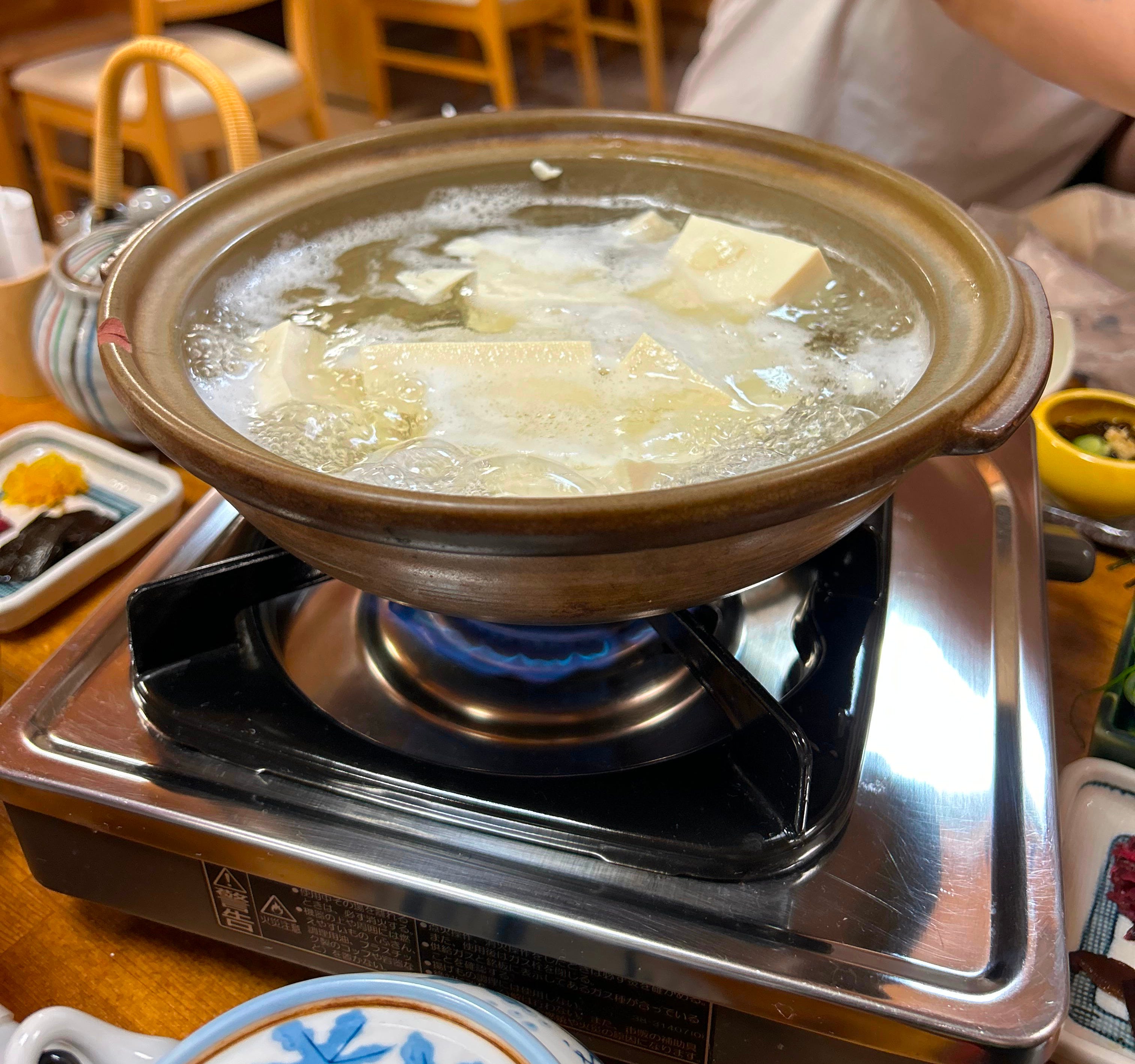
For example, last month, I had the chance to learn about Japanese-style hot pots, too, (nabe or nabemono). There are two basic kinds of nabe: one that uses a lightly seasoned broth, sometimes with flavorful dipping sauces (yudofu or mizutaki are good examples of this kind of nabe), and one that uses a richer, saltier broth that provides most of the flavoring (like sukiyaki).
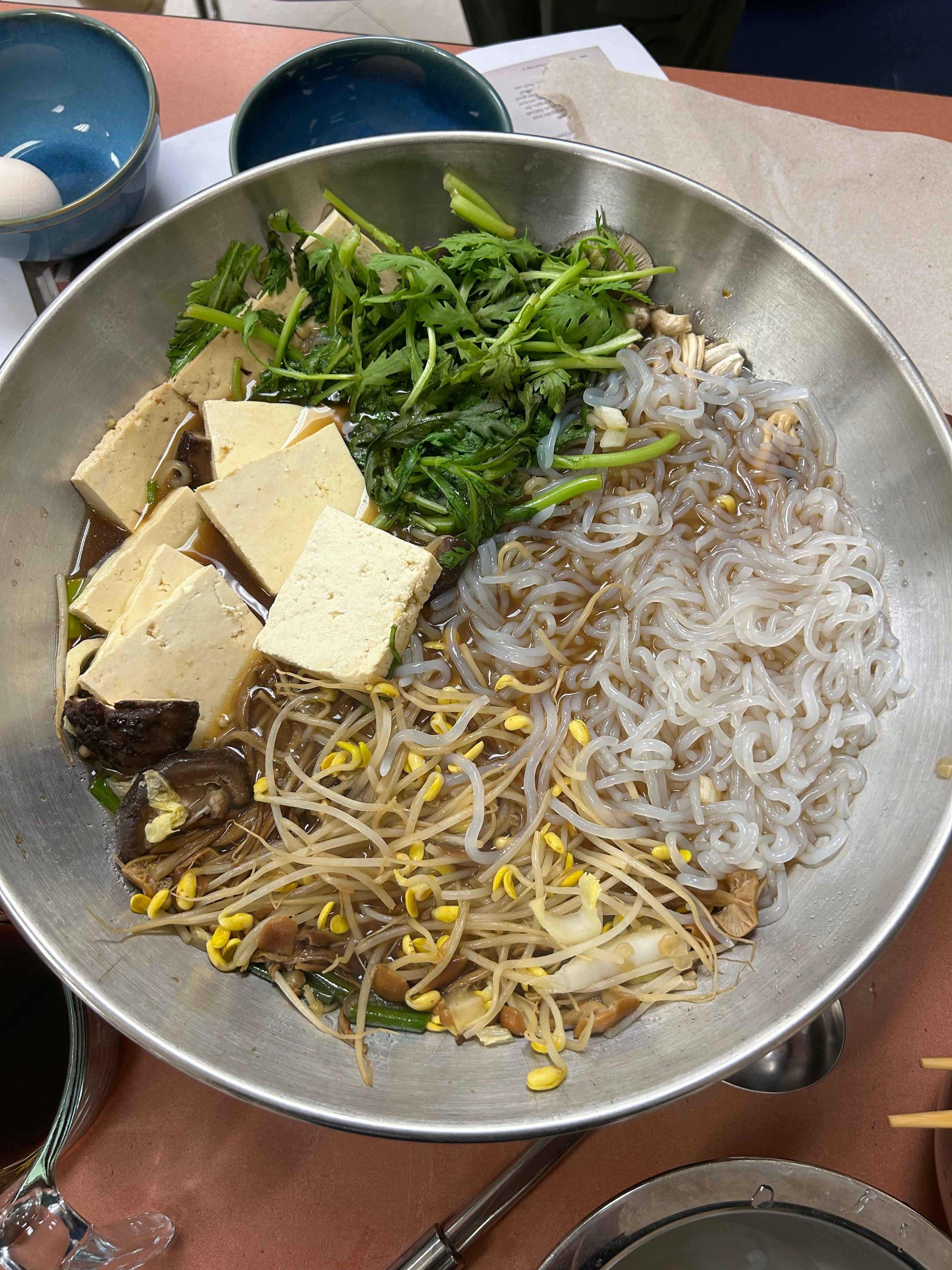
I took a sukiyaki class and learned how to make this richer kind of dashi broth infused with soy sauce, mirin, sugar, and sake. Napa cabbage, mushrooms, chrysanthemum greens, thinly sliced beef, shirataki and more are arranged in this broth and then covered for a few minutes. Unlike Chinese-style hot pot, in which ingredients are gradually added and eaten over the course of the meal, the ingredients in sukiyaki are cooked all at the beginning. Once you uncover the lid, you start eating and dip your ingredients in beaten, raw egg. It was such a delight to learn a new way of having such a nostalgic experience with a bunch of people I got to know for the first time, and with ingredients fresh from nearby farms. Unlike most cooking classes where you don’t really get to know your classmates very well and the work is mostly independent, hot pot is communal by nature. If you want to try making this yourself, I recommend checking out Real Japanese Cooking by Makiko Itoh.
I’m excited to show you how I personally prepare hot pot. I encourage you to include it in your Lunar New Year celebrations!
Happy & prosperous Year of the Fire Horse, Shannon.