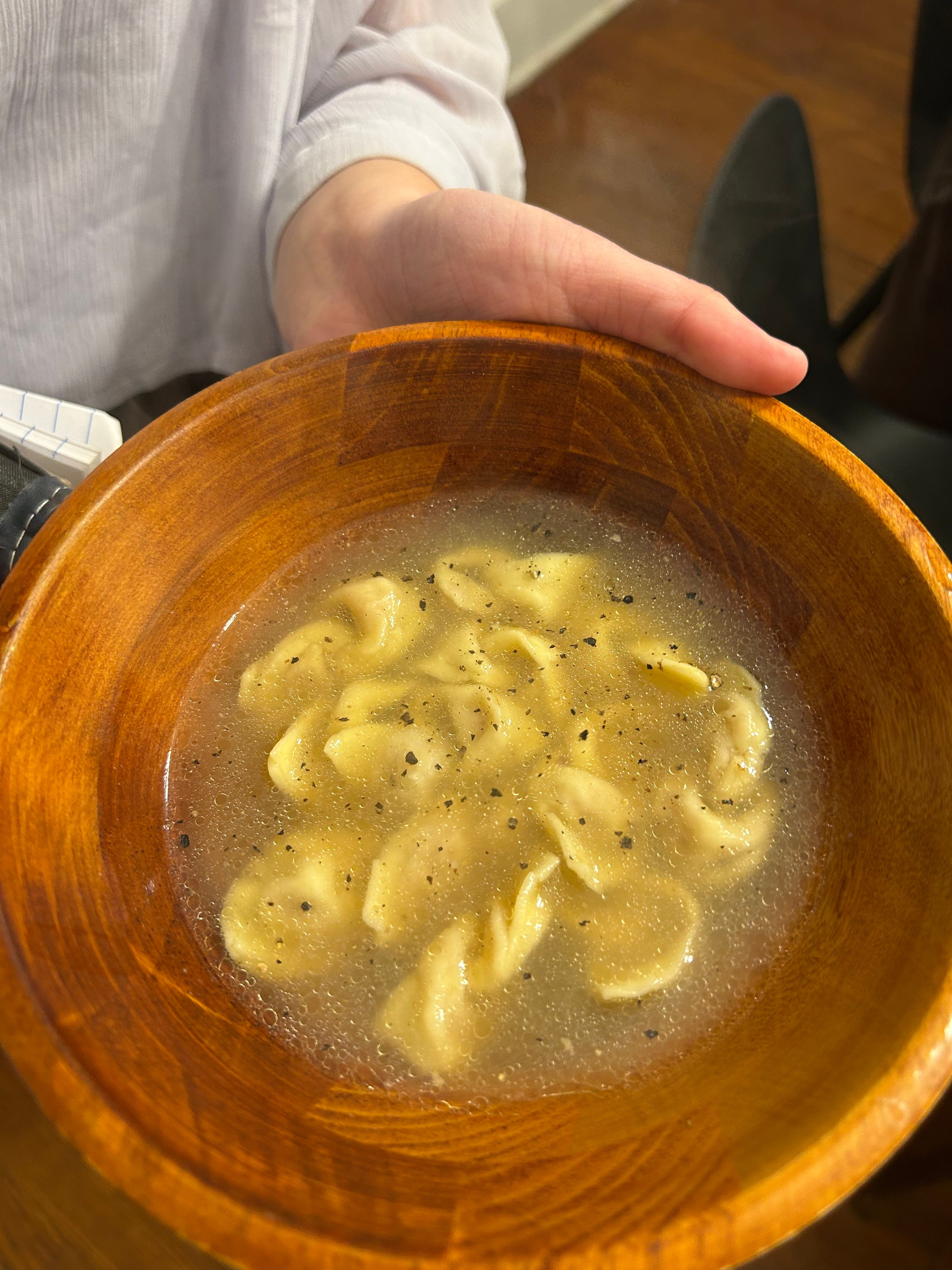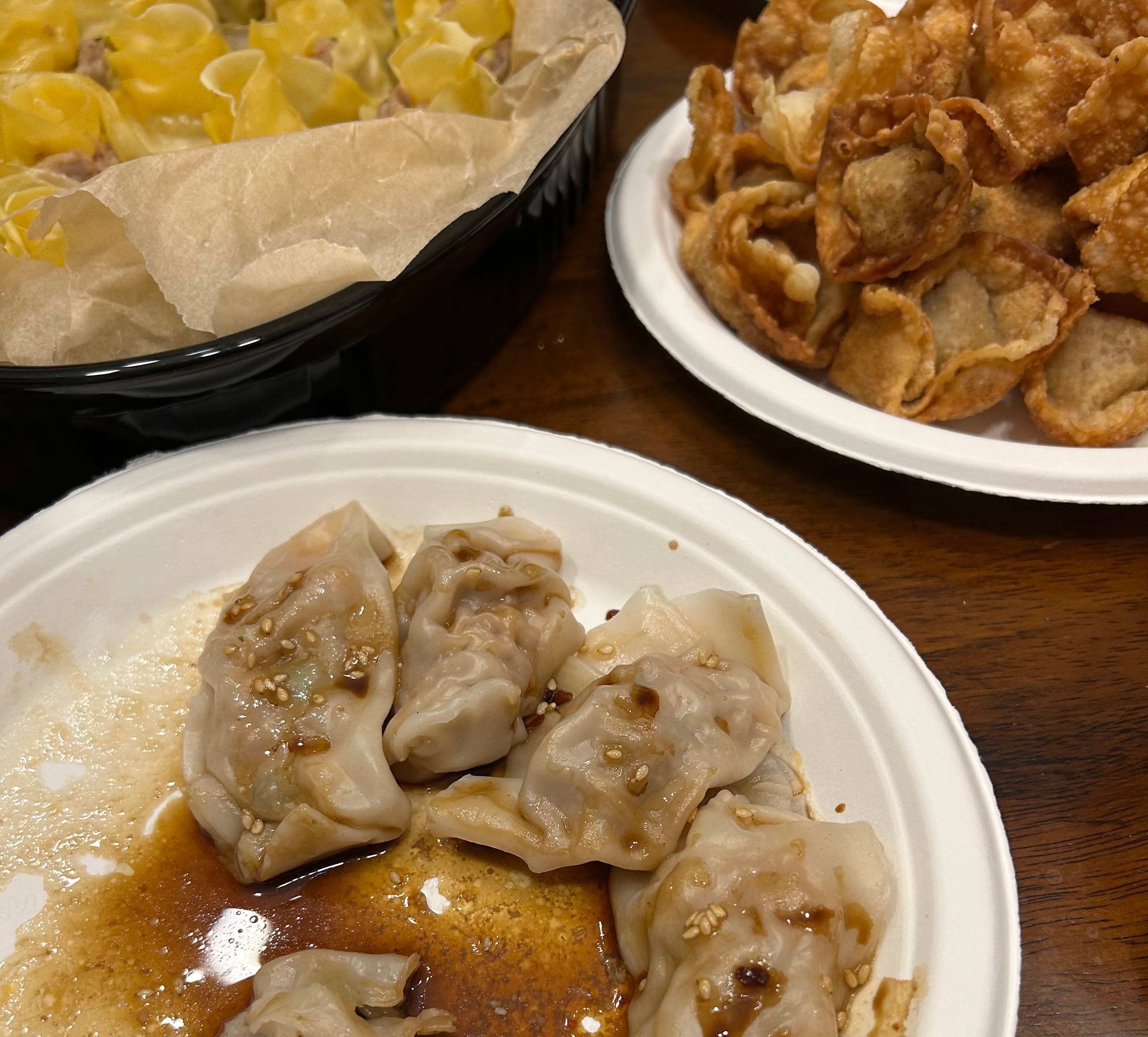
Many of the ways I celebrate Lunar New Year I learned from my family, like going to yum cha, exchanging lai see, and watching lion dances. But it wasn’t until I was an adult that I started celebrating the new year with my friends by having dumpling-making parties. Last year, I brought my trusty frying pan to my friend’s house and, as about a dozen people folded dumplings in the living room, a small group of us cooked them in the kitchen. It’s partly because of these parties that potstickers have become one of the few foods I think I can say I’ve actually made hundreds of. This is something I genuinely look forward to every year. I love that dumplings can look pretty, but they certainly don’t have to be pretty to taste amazing.
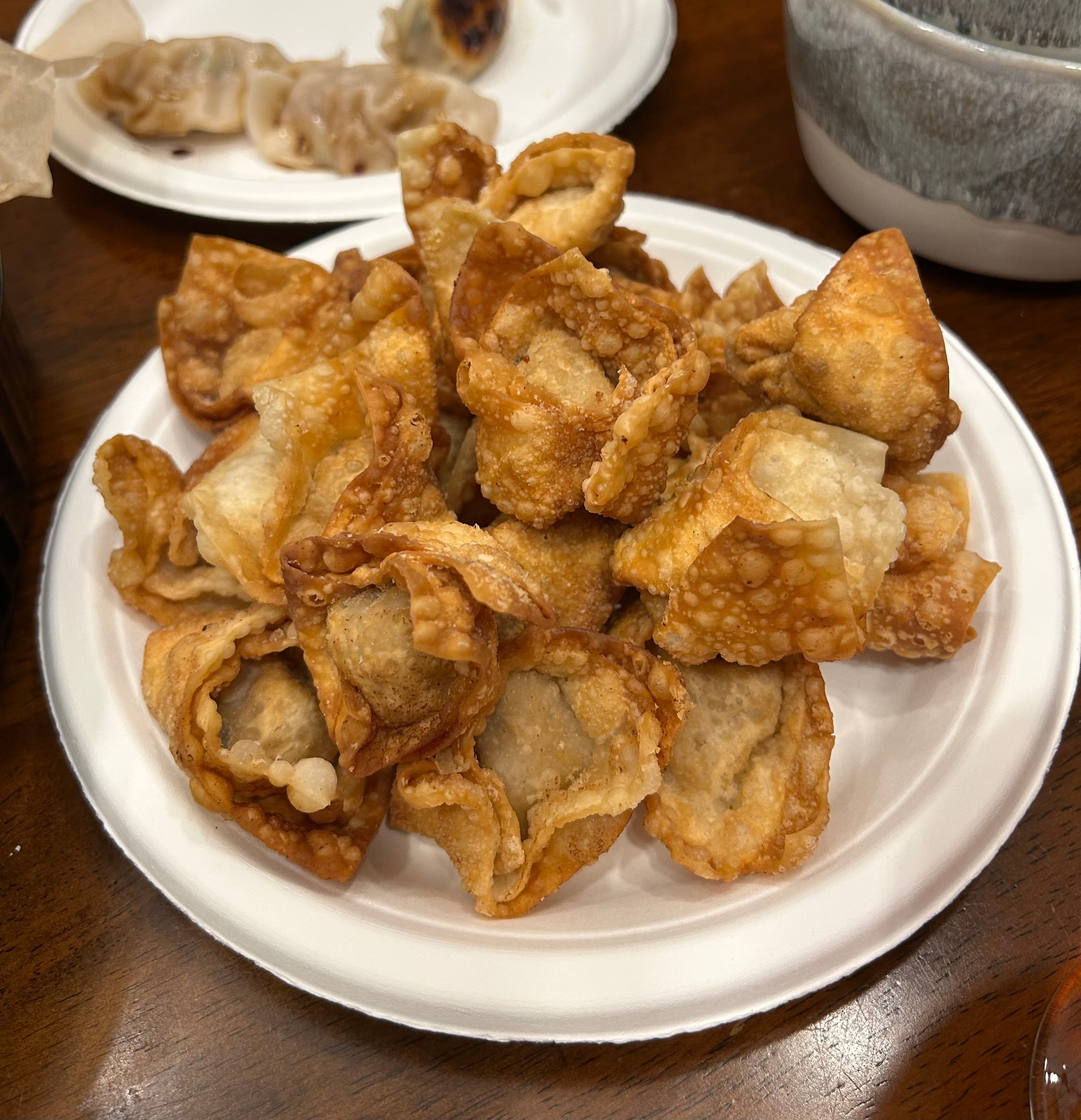
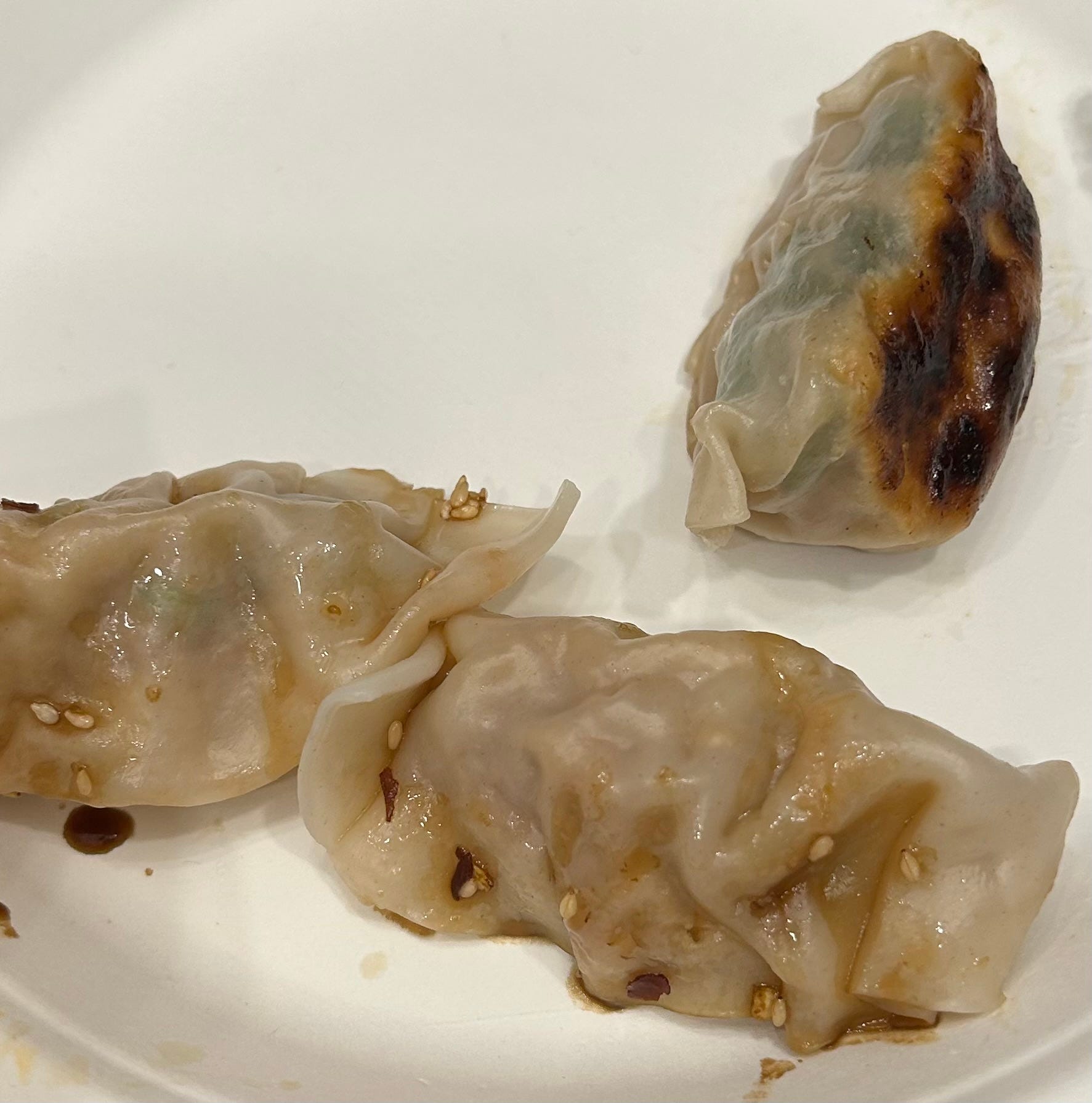
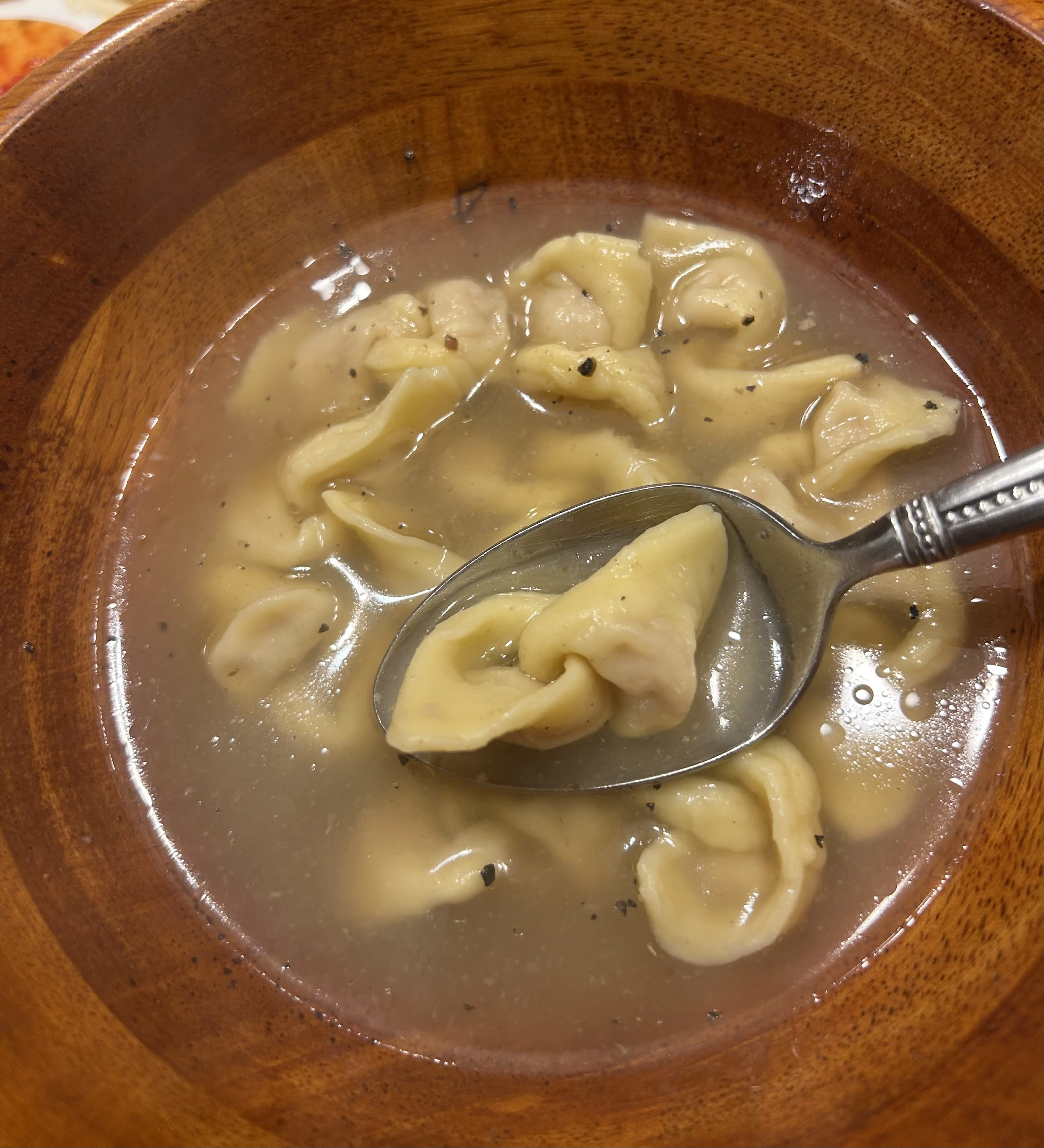
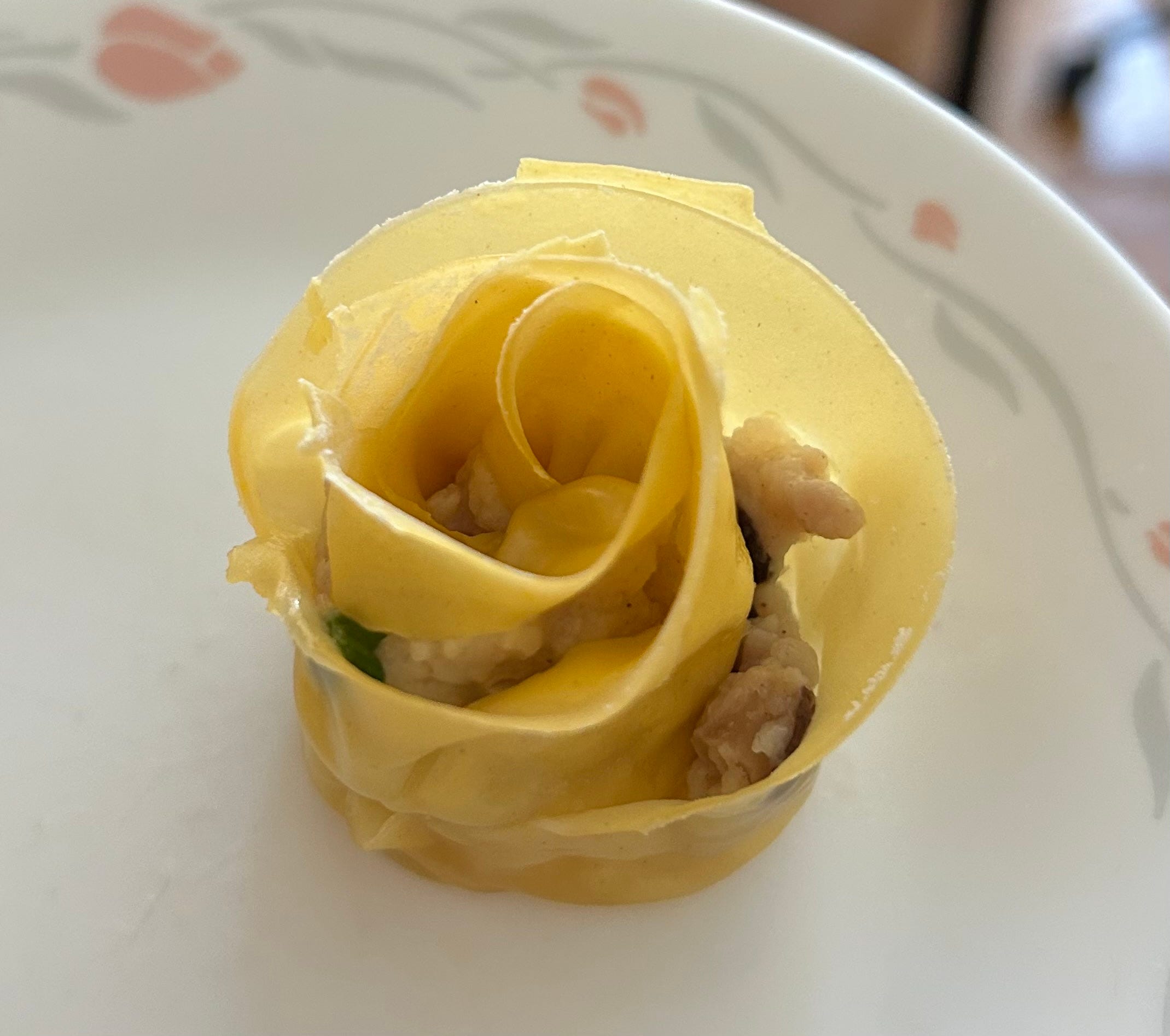
This year, everyone brought a bunch of different dumplings, sides, and desserts to the party, and they were all honestly so good. It was actually hard to photograph it all because we were so ravenous! Below is only a selection.
This party reminded me of one of my favorite food memoirs, Tiny Moons by Nina Mingya Powles.
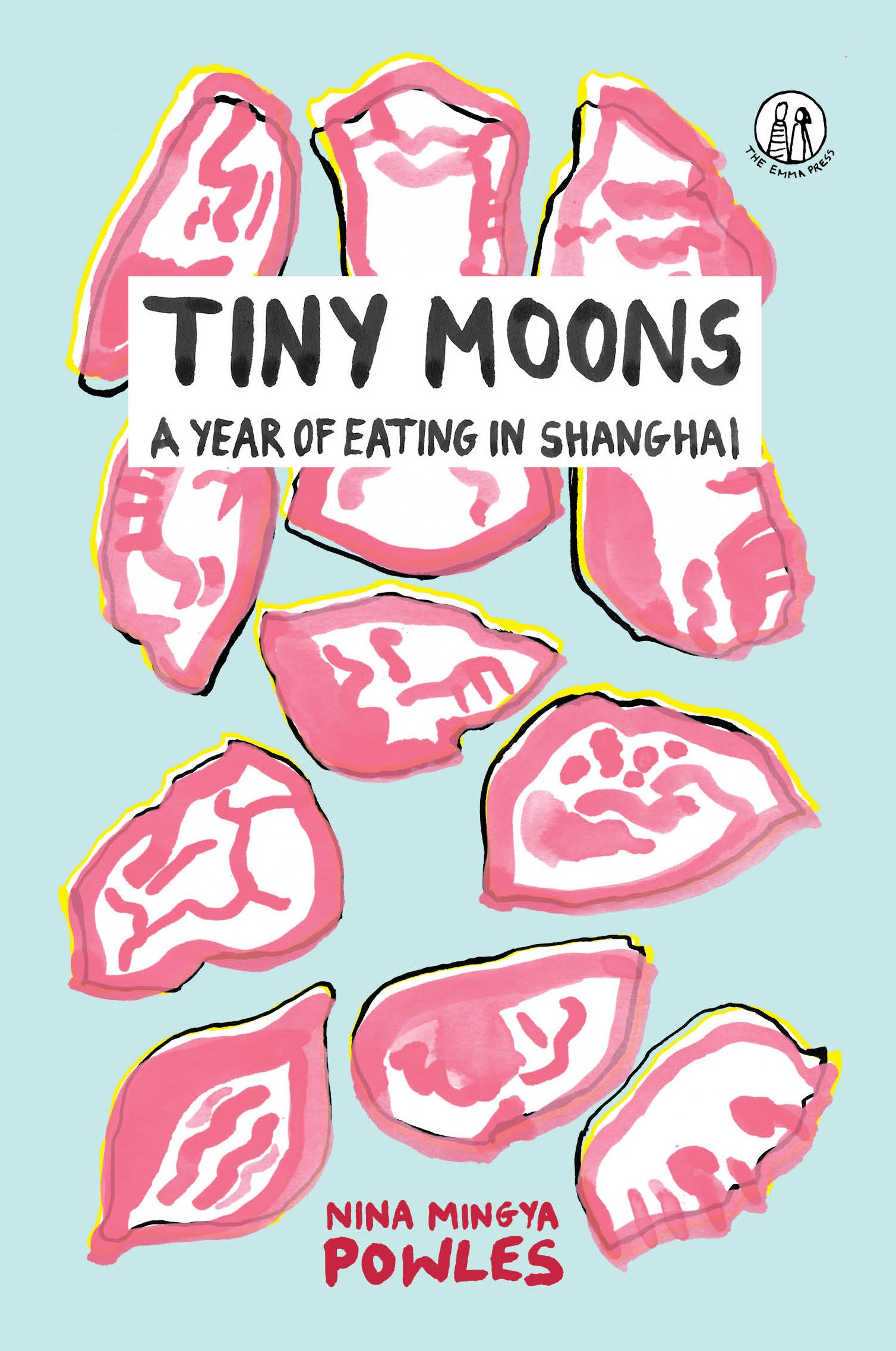
The memoir is a collection of vignettes organized by dish and by season — in fact, three of the winter chapters are “Pan-fried Dumplings,” “Wonton Noodle Soup,” and “Boiled Dumplings.” The memoir describes her leaving her home in New Zealand for a year to study Mandarin in Shanghai. The prose is written by someone who not only loves cooking and eating but writes about them in such a delightfully sensory way. It reminded me at times of M.F.K. Fisher, Michelle Zauner, and Gabrielle Hamilton. It opens with one of the dumpling chapters, in which she describes the place that has become her go-to dumpling joint in Shanghai.
There are no chairs, only one long stainless steel bench where grandmas and grandkids sit elbow-to-elbow, shovelling soup and dumplings drenched in chilli oil into their mouths. I can’t read the whole menu but it doesn’t matter, because the way it works here there are two windows where you queue for two kinds of dumplings: the famous shengjianbao (fried soup dumplings) and guotie (pan-fried dumplings). I hand the chef my order receipt and he piles four fat guotie into a plastic container. He points me to the vinegar-and-chopsticks station even though I swear he must recognise me — how could he not? I come in almost every day. But he offers no sign of recognition, and returns grumpily to doling out more dumplings.
I eat my guotie right there, standing beneath the fluorescent lights. First the crunch, then hot soup scalds my tongue — I wasn’t expecting so much soup — then gingery, garlicky pork in the middle. I’ve got soup in my hair and all over my chin and there’s an auntie staring at me who finds this very funny, but I don’t care. I take a bite and my worries melt away. I’m home and also far away from home, in one bite.
So much of the book contains these evocative descriptions of food and memory because this isn’t a “parachute travel” memoir where every encounter is something completely new to Powles. Rather, the author, having grown up in New Zealand as part of the Chinese and Malaysian diaspora, is re-encountering more than encountering. The book is more focused on nostalgia, and a kind of mourning and celebration of the food and people of the past, than discovery. The melancholy lingering behind each new experience in Shanghai adds a great tenor to the lightness of the food memoir genre. I recommend picking up a copy, and eating some dumplings yourself this month if you haven’t yet!